













Hotel bedsheets are commercial bedding textiles designed to create a clean, comfortable, and consistently presented sleeping surface in guest rooms. Their performance depends on material, fabric construction, sizing, laundering compatibility, and durability.
Hospitality bedsheets are used more intensively than typical household sheets. They may be changed and laundered frequently, making practical performance an important consideration in product selection.
For hotels and accommodation businesses in Malaysia, choosing suitable bedsheets requires balancing guest comfort with the demands of commercial housekeeping and laundry operations.
Types of Hotel Bedsheets
Hotel bedsheets generally fall into two main categories: fitted sheets and flat sheets. Each format has different handling and sizing requirements.
Fitted sheets use elasticated sections to secure the fabric around the mattress. Accurate measurements are essential, particularly the mattress depth.
Flat sheets are rectangular and can be tucked around the mattress according to the hotel's bed-making method. Their flexible construction can suit different mattress depths, provided there is sufficient fabric for a secure tuck-in.
Hotels may use one format consistently or combine sheets depending on room standards and housekeeping practices.
Common Bedsheet Materials
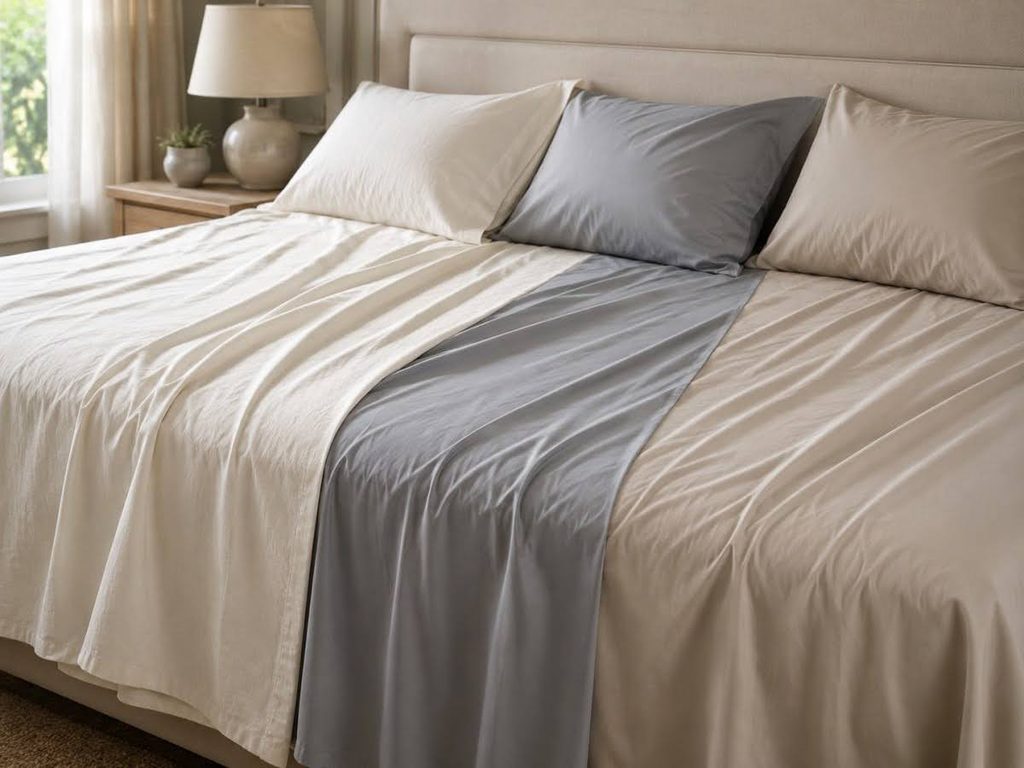
Bedsheet materials influence feel, breathability, durability and laundering behaviour. Cotton, polyester and blended fabrics are commonly used in commercial linen.
Cotton
Cotton can provide a soft and breathable surface that many guests associate with comfortable bedding. Its performance varies according to yarn quality, weave and finishing.
Polyester
Polyester can contribute dimensional stability and durability to commercial bedsheets. Its moisture behaviour and feel differ from cotton, which should be considered when evaluating guest comfort.
Cotton-Polyester Blends
Blended fabrics combine characteristics of cotton and polyester. They may be considered when hotels want to balance comfort, laundering practicality and dimensional stability.
No material should be selected solely by fibre name. The full fabric specification determines how the bedsheet performs.
Understanding Thread Count
Thread count describes the number of threads within a defined area of woven fabric, but it does not independently determine hotel linen quality.
A high thread count does not automatically mean a sheet is more suitable for commercial use. Fibre quality, yarn construction, weave, finishing, and repeated wash performance also matter.
Hotels should therefore assess thread count alongside:
- Fibre composition
- Fabric construction
- Laundry requirements
- Shrinkage behaviour
- Guest-facing comfort
A balanced assessment provides a more useful indication of suitability than relying on a single numerical specification.
Comfort Requirements
Comfort in hotel bedsheets is affected by softness, surface texture, breathability, and moisture management. These characteristics interact with the mattress, duvet, and room temperature.
Malaysia's climate can make breathable bedding materials particularly relevant, although air-conditioned guestrooms create different indoor sleeping conditions.
Hotels should therefore consider the actual room environment when selecting sheets.
Very soft fabric is not necessarily the most appropriate commercial choice if it cannot withstand the property's normal laundering and handling procedures. Comfort and operational durability need to be evaluated together.
Commercial Durability
Commercial durability means maintaining usable dimensions, structure and appearance through repeated cycles of washing and room preparation.
Hotel sheets experience friction during sleeping, mechanical action during laundering and repeated pulling during bed-making.
Hotels should inspect areas that commonly experience stress, including:
- Seams and hems
- Fitted-sheet elastic
- High-contact fabric areas
- Corners
- Edges
Fabric thinning, broken stitching and permanent dimensional changes can indicate declining commercial performance.
Frequent Laundering
Frequent laundering is a routine part of hotel bedsheet use and can influence fabric lifespan. Washing, drying and finishing processes expose the textile to repeated mechanical and thermal stress.
Hotels should follow product care guidance while ensuring that specifications match the processes available through their laundry operations.
Outsourced laundry providers should also receive relevant information about the bedding specifications where necessary.
A bedsheet that requires processes that are incompatible with standard hotel laundry operations may create unnecessary complexity.
Hotel Linen Maintenance
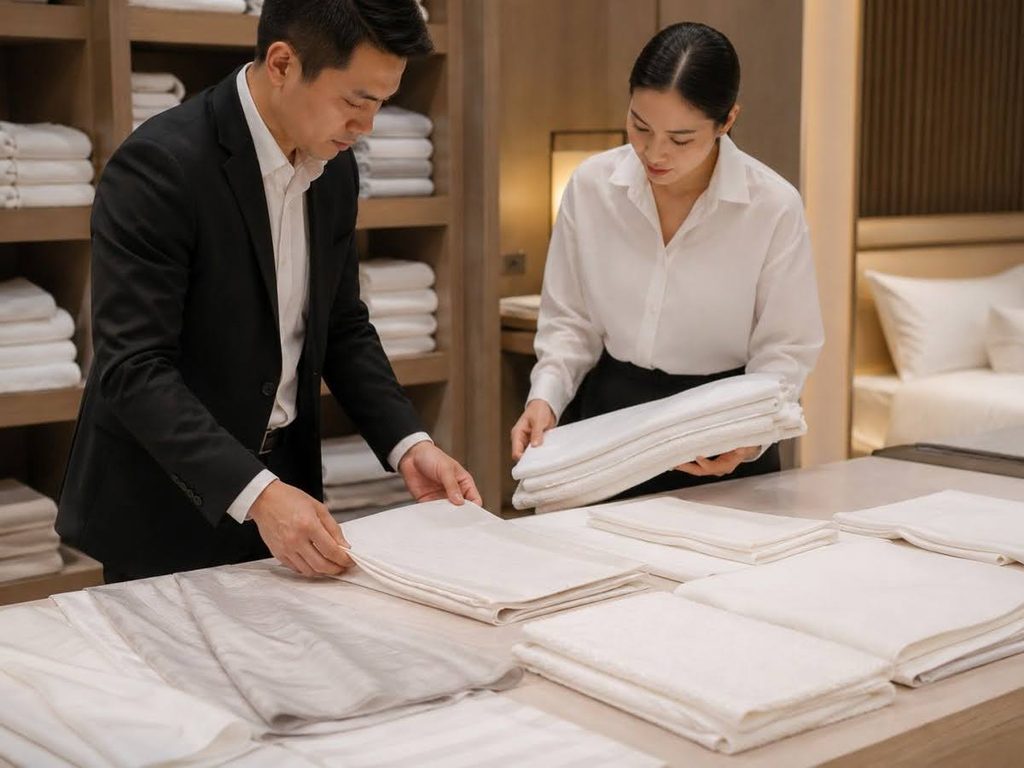
Hotel linen maintenance involves cleaning, inspecting, storing and replacing bedsheets according to their condition and operational requirements.
Routine inspection can help identify damage before sheets return to guestrooms.
Hotels can check for:
- Permanent staining.
- Torn or weakened seams.
- Fabric thinning.
- Excessive shrinkage.
- Loss of elasticity in fitted sheets.
Clean linen should also be stored in conditions that protect it from unnecessary moisture and contamination before room preparation.
Replacement Indicators
Hotel bedsheets should be replaced when they no longer meet the property's practical or presentation standards. Replacement does not need to follow a fixed timetable because wear can differ according to usage and laundering.
Visible deterioration is usually a more useful indicator.
Permanent stains, weakened fabric, damaged seams and poor mattress fit can all justify removing a sheet from guest-room circulation.
Hotels should document recurring types of damage. If a particular specification consistently fails prematurely, the issue may relate to fabric selection or laundry compatibility rather than ordinary ageing alone.
Buying Considerations
Choosing hospitality bedsheets should begin with actual operational requirements. Bed dimensions, material preferences, laundry procedures, and room categories all need to be identified before purchasing.
A practical selection process can include:
- Measuring mattresses accurately
- Comparing fabric compositions
- Reviewing care requirements
- Testing sample products
- Confirming repeat-order specifications
Hotels purchasing larger quantities should also consider consistency across batches. Maintaining documented specifications helps replacement stock remain compatible with existing commercial linen.
Bedsheets Within the Wider Hotel Linen System
Hotel sheets form one component of a broader hospitality bedding system. Their size and performance need to correspond with mattress protectors, toppers, pillows and duvets.
For a broader explanation of how these products work together, the Complete Guide to Choosing Hotel Linen and Bedding for Hospitality Businesses provides additional guidance on bedding materials, sizing, commercial laundry and procurement.
Maintaining Practical Bedsheet Standards
Hotel bedsheets need to satisfy both guest-facing and operational requirements. Materials, thread count, fabric construction, and comfort should all be considered alongside repeated laundering and commercial durability.
A clear bedsheet specification can make housekeeping more consistent and improve future purchasing decisions.
Hotels that monitor wear and maintain accurate dimensions are also better positioned to identify when replacement is necessary.
Frequently Asked Questions
What material is commonly used for hotel bedsheets?
Cotton, polyester and cotton-polyester blends are commonly considered for hotel bedsheets. The appropriate material depends on comfort, laundering and durability requirements.
Does a high thread count mean better hotel sheets?
Not necessarily. Thread count is only one fabric characteristic and should be assessed alongside fibre type, yarn construction, weave, and commercial wash performance.
How should hotels determine bedsheet size?
Hotels should measure mattress width, length, and depth. Mattress toppers and protectors should also be considered because they can change the effective mattress depth.
When should hotel bedsheets be replaced?
Bedsheets should be removed when stains, thinning, seam damage, shrinkage, or loss of fitted-sheet elasticity prevent them from meeting the property's standards.
Plan Your Hospitality Bedsheet Requirements with Eastern Decorator
Hotels choosing hospitality bedsheets should consider mattress dimensions, fabric composition, comfort, durability, and commercial laundry requirements before finalising a specification. Eastern Decorator provides hotel bed linen solutions for hospitality businesses with different operational and room requirements. To learn more about suitable commercial bedsheets and hospitality linen options, get in touch with Eastern Decorator.

